JVSG: A Practical Guide to CCTV System Planning
If you have spent any time in the physical security industry, you have probably come across the term "jvsg" in technical discussions or system design briefs. While it might sound like another acronym in a sea of them, understanding what jvsg represents can make a real difference when you are planning a CCTV installation, whether for a small retail shop or a multi-building campus. This article walks through the practical side of designing a reliable video surveillance system, drawing on real-world experience and the tools that help get the job done right.
Why System Planning Matters More Than Hardware Choices
Early in my career, I learned the hard way that buying the most expensive IP cameras does not guarantee a good system. I once worked on a warehouse where the client insisted on top-of-the-line 8K cameras, but we had to run them over underspecified PoE switches and cheap cabling. The result was constant frame drops, night vision that looked like fog, and a storage calculator that showed we would fill a 12TB drive in three days. That project taught me that camera placement, cable management, and lens selection are just as important as resolution and brand names like Hikvision or Dahua. The jvsg concept, when applied correctly, forces you to think about the whole chain, from the camera lens to the NVR storage.
The Role of Site Surveys in Modern CCTV Design
A proper site survey is the foundation of any successful installation. You need to measure distances, note light levels at different times of day, and identify blind spots. In outdoor areas, you have to account for weather, glare from low sun, and potential vandalism. For indoor spaces, ceiling height and wall construction matter a lot. I always carry a notebook and a laser rangefinder, but I also rely on software that can simulate field of view before I climb a ladder. Tools like CCTVplanner allow you to drop virtual cameras onto a floor plan and see exactly what each lens will capture. This is where the jvsg approach comes into play: it encourages a systematic, repeatable design process that minimises guesswork.
During one hospital project, we had to cover a long corridor with multiple turns. Using CCTVplanner, we mapped out each camera's field of view and found that a mix of 4mm and 6mm lenses gave us uniform coverage without expensive PTZ units. The system diagram that came out of that tool saved us hours of on-site adjustments.
Cameras, Lenses, and Resolution Trade-Offs
Choosing between IP cameras and analog cameras is no longer a simple question. Analog systems have improved with HD-TVI and HD-CVI technologies, but IP cameras still dominate for scalability and video analytics. That said, the real decision often comes down to the environment and budget. For a car park where you need wide coverage, a 2MP IP camera with a varifocal lens can outperform a fixed 5MP camera because you can adjust the field of view on site. Resolution alone does not mean better identification. A 2MP camera with good lens selection and proper lighting will give you a clearer image of a license plate than an 8MP camera pointed too far away.
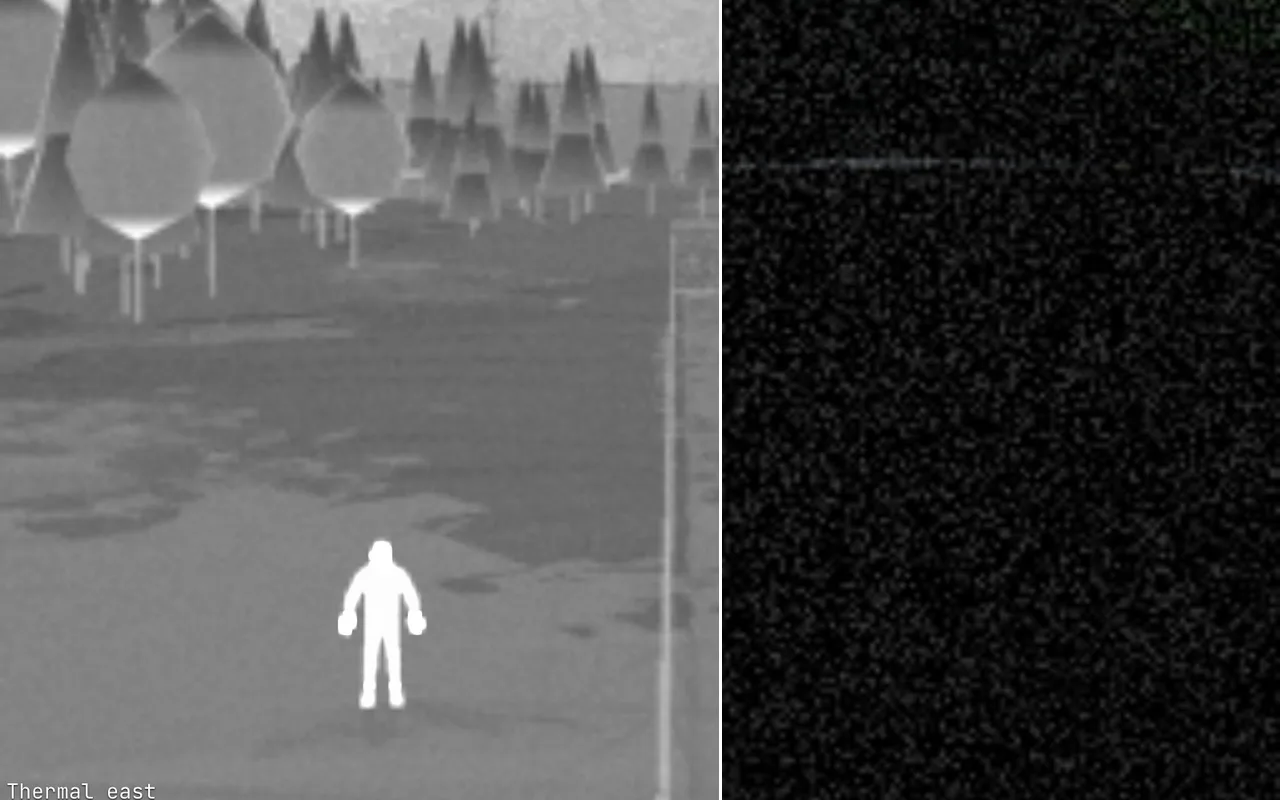
Night vision is another area where specifications can mislead. IR range on the datasheet assumes ideal conditions. In practice, dust, humidity, and reflective surfaces reduce that range by half or more. I have seen installations where the camera's IR LEDs lit up a nearby wall, leaving the area beyond completely dark. The fix often involves adding external IR illuminators or choosing cameras with better low-light sensors. Bosch and Axis Communications produce some excellent models for challenging low-light environments, but they require careful planning to justify the cost.
Bandwidth and Storage: The Hidden Constraints
Every camera you add consumes bandwidth and storage. A 4K camera at 15 frames per second can use 8 Mbps or more on your network. Multiply that by 30 cameras and you need a robust network backbone with managed PoE switches and proper VLAN segmentation. The storage calculator becomes your best friend here. Most reputable NVR brands, including Hikvision and Dahua, provide calculators, but they often assume ideal compression settings. In real life, you need to add a margin for motion-triggered recording and longer retention periods. A system that records 24/7 at full resolution will fill a 48TB array in weeks. By using motion detection and scheduling lower resolution during quiet hours, you can stretch that storage significantly.
I once designed a system for a school where the client wanted 90-day retention. The first storage estimate came back at 120TB, which blew the budget. By switching to H.265 compression, lowering frame rates in corridors at night, and using video analytics to trigger high-resolution recording only when a person entered restricted zones, we got it down to 40TB. That kind of optimisation is what separates a well-planned system from a costly one.
Practical Cable Management and Network Infrastructure
Cable management is not glamorous, but it is the backbone of reliability. I have seen too many jobs where installers run Cat6 cables alongside power lines, causing interference, or use cheap connectors that fail after a year. For IP cameras, always use solid copper cable, not copper-clad aluminium. Plan your cable runs to avoid sharp bends and keep them away from electrical conduits. PoE switches should be sized to handle the total power draw of all connected cameras, plus a 20% buffer. If you are mixing cameras from different manufacturers, check their PoE class; some older models still use PoE+ even if they do not advertise it.
When you use a tool like CCTVplanner, you can include cable paths and switch locations in the system diagram, which makes the handover to the installer much smoother. That diagram becomes a reference for future maintenance as well.

Video Analytics: More Than Just Motion Detection
Modern NVRs and some high-end cameras can perform video analytics on board. This goes beyond simple motion detection. You can set up virtual tripwires, loitering detection, and object removal alerts. For a retail environment, people counting and heat mapping can provide business intelligence alongside security. The key is to avoid false alarms. Too many triggers from trees moving or shadows will cause operators to ignore alerts altogether. Fine-tuning the sensitivity and setting up exclusion zones takes time but pays off. I usually start with conservative settings and adjust after a week of monitoring.
Creating Client Proposals That Actually Get Approved
One of the hardest parts of this industry is translating technical details into a proposal that a client can understand. A client proposal should include a clear system diagram, a list of equipment with quantities, and a summary of coverage areas. Avoid jargon unless you explain it. I have found that including a simple visual of the camera coverage overlay on the floor plan helps clients see the value immediately. Tools like CCTVplanner let you export that diagram directly, which saves hours of work in CAD or Visio.
When you present a proposal, walk through the trade-offs you made. Explain why you chose a 5MP camera over a 2MP camera for the entrance but used 2MP cameras for the warehouse aisles. Clients appreciate honesty. If you tell them that a cheaper camera with proper lens selection will cover their loading dock better than an expensive PTZ, they trust you more. That trust leads to repeat business and referrals.
Bringing It All Together with a Systematic Approach
At the end of the day, CCTV design is about making informed decisions under real-world constraints. Whether you work with Hikvision, Dahua, Axis Communications, or Bosch, the principles remain the same. Understand the site, match the camera and lens to the scene, plan your network and storage, and document everything. The jvsg methodology, if you want to call it that, is just a structured way of doing all of this without skipping steps.
I have seen too many systems fail because someone rushed the planning phase. A camera pointed at a glass door with backlight will wash out the person standing inside. A lens that is too wide will make faces unrecognisable at 15 meters. An NVR with insufficient processing power will drop frames when multiple cameras trigger recording at once. These are not hardware failures; they are design failures. By following a systematic process, you avoid them.

If you are new to the field, start by learning one tool well. Practice laying out cameras on a floor plan, run the numbers on storage, and generate a proposal. With time, you will develop an instinct for what works. And when a client asks why your system costs more than a competitor's, you can show them the field of view analysis, the storage calculator results, and the cable management plan that will save them money over the long term.
That is the real value of a well-planned CCTV system. It is not about having the most expensive gear. It is about having the right gear, placed correctly, connected reliably, and documented thoroughly. That is what jvsg stands for in practice: judgment, verification, and a systematic guarantee that the system will perform as designed.